
* THESE NOTES ARE CURRENTLY UNDER DEVELOPMENT AND ARE NOT 100% ACCURATE *
All images, text, JavaScript and HTML Code ©1995- by llamamusic.com
This web browser utility reads D‑10 Bulk Dump *.SYX files from a computer, tablet or smartphone and displays all Patch & Tone names. It was designed to create Patch and Tone listings from all of my Roland and third‑party PCM cards (PN‑D10‑03, Valhala, Best Choice, Voice Crystal, etc...) and various D‑10 SysEx files downloaded from the Internet. The method used is to LOAD ALL from a PCM card or RAM Memory Card into Internal Memory and then perform a BULK DUMP (Dump One Way ‑ All) on the D‑10 to create a valid SysEx file. Likewise, you can also load D‑5/10/20/110 SysEx files into the D‑10, perform a BULK DUMP and save SysEx files which can then be read by this utility. This utility will not work with any SysEx files previously created on a D‑5, D‑10, D‑20 or D‑110 synth (unless it was saved on a D‑10 using BULK DUMP (Dump One Way ‑ All)
Version 1.0(a) - 12/31/2023
     • Initial Release
Version 1.1 - 02/22/2024
     • Fixed a bug which was not displaying "Less Than" and "Greater Than" characters for Patch and Tone Names ("<" and ">")
Notes About D‑10 SysEx Bulk Dump Files & Synth Structure
- As you have probably noticed, there are several D‑10 SysEx files to be found on the Internet. Not all of these files will load correctly into the D‑10. Likewise, not all of these files will work with this utility. This utility is designed to work only with D‑10 SysEx files created using the BULK DUMP (Dump One Way ‑ All) method. This utility is able to tell the difference between SysEx file structures when you load them. The size of a Dump One Way ‑ All file is ~44KB
- There are a few D‑10 Patch banks in a *.ZIP file at this link which you can use to test the program, all saved as BULK DUMP (Dump One Way ‑ All)
 D-10_Reader_SysEx_Test_Files.zip
- SysEx files created on a D‑110 will load on a D‑10 but only 128 Tones will be loaded. No Patch info will be transferred. This is because D‑10 Performance Patches, Rhythm Patterns and Rhythm Tracks are not compatible with the D‑110. Keep this in mind when working with D‑110 files on a D‑10 because the Patch columns will have generic or blank enteries

- When using this utility on a Mac system, to speed up the load process, open a Finder window and search for all *.SYX files. Drag one file at a time from the Finder window directly onto the "Choose File (Safari/Chrome)" or "Browse (FireFox)" button in this browser utility. The file will then be read automatically without having to drill down and search through several directories (click for larger image)
D-10 Architecture
P A T C H E S
There are a total of 128 user editable Patches on the D‑10. The settings you can change in Patches are:
Patch Name - Reverb - Assign Mode - Panning - Tone Select - Tuning - Split Point - Bender Range & more
When you load a SysEx file, these 128 user Patches are overwritten with whatever data is contained in the SysEx file
T I M B R E S
There are a total of 128 preset Timbres on the D‑10. The settings you can change in Timbres are:
Tone Select - Fine Tuning - Reverb Switch - Assign Mode - Bender Range - Key Shift
When you load a SysEx file, these 128 Timbre settings are overwritten with whatever data is contained in the SysEx file
T O N E S (User Editable)
There are a total of 64 user editable Tones on the D‑10. The parameters you can change in Tones are:
Common Parameters (Envelopes, LFO's, Frequency, etc...) - PCM Waveform - Structure - Tone Name & more
When you load a SysEx file, these 64 user Tones are overwritten with whatever data is contained in the SysEx file
T O N E S (Preset Internal)
There are a total of 128 preset internal Tones on the D‑10. These are hard coded on IC12 and cannot be edited (ROM)
When you load a SysEx file, these 128 preset internal Tones are unaffected
M E N U D I V I N G
While scrolling through the menus on the LCD, you will notice different prefixes in front of the various sound names
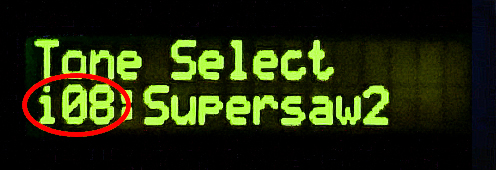
       i08 = User Editable Tone #08     (RAM) / Bank i  (Bank i Tones can be edited and/or overwritten by a SysEx file)
     I-A36 = User Editable Patch #36    (RAM) / Bank A  (Bank A Patches can be edited and/or overwritten by a SysEx file)
     I-B84 = User Editable Patch #84    (RAM) / Bank B  (Bank B Patches can be edited and/or overwritten by a SysEx file)
       a46 = Preset Internal Tone #46   (ROM) / Bank a  (Bank a Tones can not be edited and/or overwritten by a SysEx file)
       b17 = Preset Internal Tone #17   (ROM) / Bank b  (Bank b Tones can not be edited and/or overwritten by a SysEx file)
       r59 = Preset Internal Rhythm #59 (ROM) / Bank r  (Bank r Rhythms can not be edited and/or overwritten by a SysEx file)
Questions & Answers
Telcordia Sr332 Issue 3 Pdf Full [top]
Reliability is the cornerstone of modern electronic system design. Whether you are developing telecommunications infrastructure, medical devices, or industrial automation systems, predicting when and how a component might fail is critical. For decades, engineers have relied on standardized methodologies to quantify hardware reliability.
Here is a link to download the Telcordia SR332 Issue 3 PDF full:
Are you comparing Telcordia SR-332 against other standards like or IEC 61709 ? Share public link
The standard defines specific operating environments, ranging from controlled indoor spaces to harsh outdoor installations: telcordia sr332 issue 3 pdf full
When searchers hunt for the document, they are typically trying to understand the mathematical formulas, baseline Failures in Time (FIT) values, and data integration methods that separate this standard from legacy military equivalents like MIL-HDBK-217 . Core Structure of the SR-332 Framework
While MIL-HDBK-217 focused on high-stress combat environments, SR-332 is tailored for: Telecommunications gear Consumer electronics Industrial automation Enterprise computing Key Changes in Issue 3
The SR-332 Issue 3 methodology is often paired with an official software tool called the . This Microsoft Excel-based tool automates the complex calculations defined in the standard, helping users quickly generate predictions for serial systems. Reliability is the cornerstone of modern electronic system
Industrial IoT gateways and programmable logic controllers (PLCs) deployed in uncontrolled environments rely on these metrics to guarantee operational safety. 6. Accessing the Official Standard
The telcordia sr332 issue 3 standard is not just a theoretical document; it has widespread practical applications:
Marcus typed a command. A list of files populated the screen. SR-332_Issue_1.pdf... SR-332_Issue_2.pdf... Here is a link to download the Telcordia
Telcordia standards are proprietary documents maintained, updated, and sold by (which acquired Telcordia Technologies, formerly Bellcore).
The standard includes clarified definitions regarding operating temperatures and component names, reducing ambiguity in calculations.
One of the core features of SR-332 Issue 3 is its flexible approach to reliability prediction, offering three distinct methods. The method you choose determines the model used to calculate failure rates.
One of the distinct features of SR-332 Issue 3 is how it handles early life failures. It defines three methods for prediction:
[Baseline Failure Rate (λg)] │ ▼ Multiplier Factors (π) ┌─────────────┼─────────────┐ ▼ ▼ ▼ [Environmental] [Temperature] [Electrical] (πE) (πT) (πS) │ ▼ [Adjusted Device FIT (λ)] Environmental Factor ( πEpi sub cap E
| If you find some of this DIY info useful, please consider donating a small amount. All donations are used for future DIY sampler development. Thanks! | 
|
 Back To The D-10 Patch & Tone Reader Utility