|
X11-Basic BASIC interpreter/compiler for UNIX(c) 1991-2022 |
 |
Version 1.28
sources:
codeberg
github
|
|
X11-Basic BASIC interpreter/compiler for UNIX(c) 1991-2022 |
|
Version 1.28
sources:
codeberg
github
|
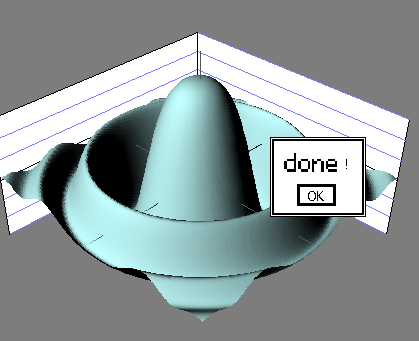 X11-Basic is a dialect of the BASIC programming language with graphics, sound and more.
The syntax is most similar to GFA-Basic on the ATARI-ST. It is a structured dialect with no line numbers. X11-Basic supports complex numbers, big integers and big integer arithmetrics.
X11-Basic is available for UNIX workstations, Linux, Android, MAC-OSX, as well as for MS-WINDOWS. It is also available for the ATARI ST, TomTom car navigation systems and the Raspberry Pi.
A BASIC compiler is included so that you can make stand-alone binaries out of your programs (on all platforms except for Android). The X11-Basic interpreter is fast and small.
Years passed. The island’s map shifted: boats came for the ledger and left more careful; a small community of people who needed anchoring drifted into the harbor; young technicians offered to help maintain the device and were given small tasks—replacing seals, drying circuits when storms leaked into the house. Pt Geza taught them to wind the bell and to be patient with things that wanted to be kept rather than exposed.
The user launches the V2.5.8 Pt Geza application. Inside the user interface, the user selects the corresponding car brand and specific chip model from a dropdown menu to ensure the calculation logic matches the file structure. 3. Loading the File
Because the program is built as a universal matrix solver, it circumvents database dependencies by interpreting binary structures shared across global automotive component suppliers. Car Brand Compatibility Common Chip Architectures Stereo Manufacturers Covered Volkswagen Group (Audi, VW, Skoda) 24Cxx Series EEPROM Renault & Dacia 93Cxx Series EEPROM Ford Motor Company 95xxx SPI Memories Fiat, Alfa Romeo, & Lancia Motorola MCU Families Clarion & Alpine Advantages of Using Version V2.5.8
Bench technicians, automotive lock specialists, DIY restorers
The software utility known as serves as an industry-recognized universal car radio dump code calculator designed to reverse-engineer and decode locked head units. This tool extracts the original factory PIN security code from a raw binary EEPROM file (commonly called a "dump file"). What is V2.5.8 Pt Geza? V2.5.8 Pt Geza
: Designed purely for utility, the interface foregoes complicated menus in favor of a quick, four-step decryption workflow.
This public link is valid for 7 days and shares a thread, including any personal information you added. This link or copies made by others cannot be deleted. If you share with third parties, their policies apply. Can’t copy the link right now. Try again later.
I can provide more detailed guidance on locating the correct memory chip or interpreting your hardware setup. Share public link
after a battery change or electrical repair. Bypassing locks on second-hand or salvaged radio units. Years passed
I can guide you through the specific code-retrieval steps or help you troubleshoot alternative software tools if needed! Share public link
The software does not brute-force the code (try thousands of combos); instead, it calculates the code based on the cryptographic data within the bin file. It is lightweight, runs on most Windows operating systems, and is often distributed as a standalone executable without complex installation requirements.
To understand V2.5.8 Pt Geza, one must first understand its lineage. The "Pt" (often interpreted as "Platinum" or "Point" depending on the technical documentation) series has been the backbone of modular data processing for the last 18 months. The "Geza" codenamed release is not merely an incremental patch; it is a hybrid update that bridges legacy stability with modern scalability.
Did you see this on a specific database, a university portal, or a software changelog? Correct Spelling: Could it be "Pt. Geza" (referring to a location like Point Geza ) or a typo for involving a specific patient, or a technical report generated by software? The user launches the V2
Using V2.5.8 Pt Geza requires an intermediate understanding of electronics, as it is not a "plug-and-play" USB solution. The process involves hardware intervention before the software can ever be deployed.
I don’t recognize a standard topic named exactly "V2.5.8 Pt Geza." I’ll make a reasonable assumption and provide three concise, useful interpretations—pick the one you meant or tell me which to expand:
Could you clarify if this is related to a specific hardware device (like a router or PLC), a gaming patch , or perhaps a medical/scientific dataset ? Knowing the context (e.g., "I saw this in a firmware log" or "This is from a textbook") would help pin down the exact content.